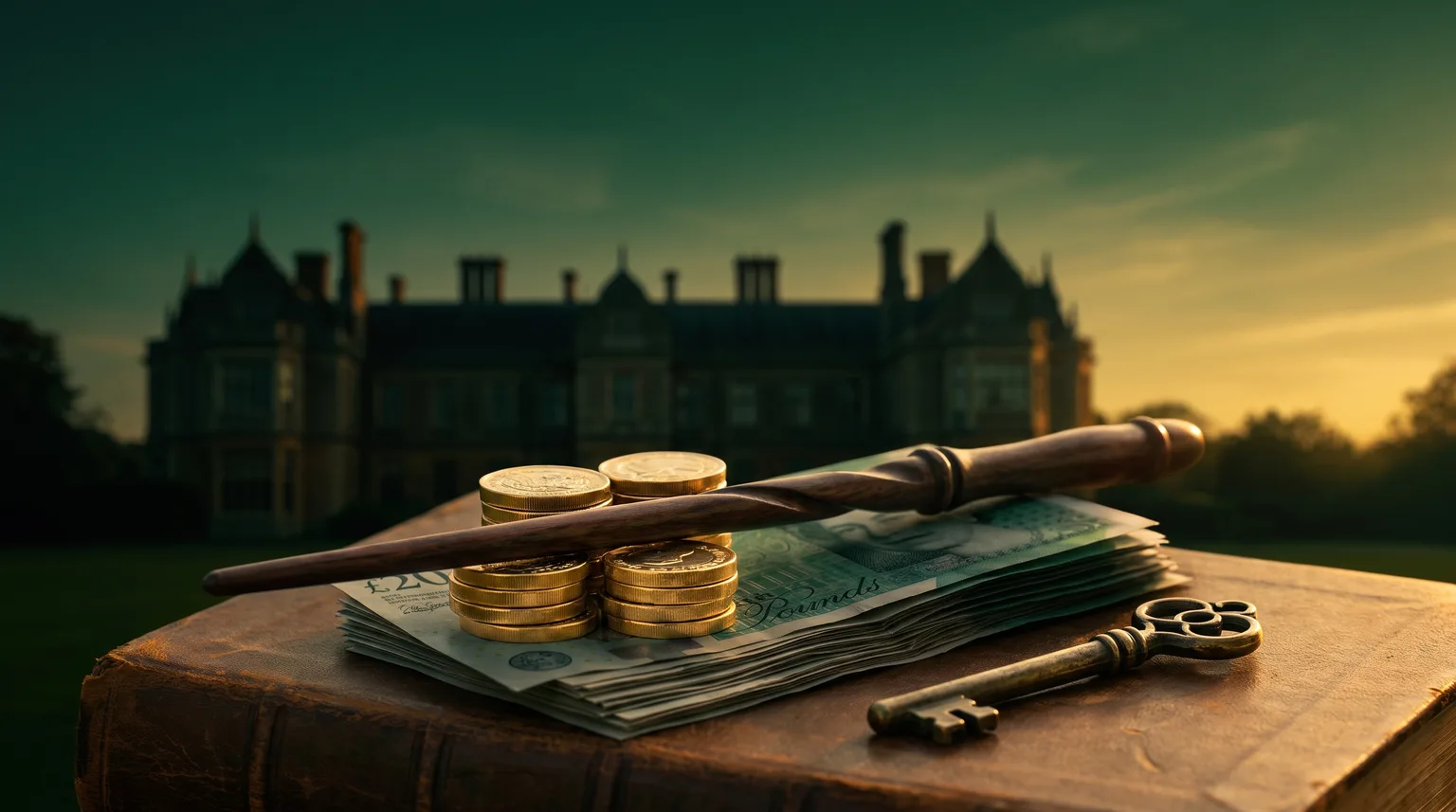
Rupert Grint's net worth in 2026 is estimated at around £40m (roughly $50m), according to figures published by aggregators such as Celebrity Net Worth. The number is an estimate rather than an audited account, but the broad picture behind it is unusually well documented for a British actor: a childhood spent inside the highest-grossing film franchise of its era, a quietly built Hertfordshire property portfolio, and a long, expensive disagreement with HMRC that has played out in public tribunals. Here is how the Ron Weasley fortune actually adds up.
Rupert Grint net worth 2026: the headline numbers
Most celebrity-wealth trackers put Grint in the region of $50m, which converts to roughly £40m at mid-2026 exchange rates. Treat that as a ballpark: net-worth aggregators estimate, they do not audit, and the figure folds together past film income, residuals and property that is hard to value precisely from the outside. What is clearer is where the money came from.
| Profile | Detail |
|---|---|
| Full name | Rupert Alexander Lloyd Grint |
| Born | 24 August 1988 (Harlow, Essex) |
| Known for | Ron Weasley in the Harry Potter films (2001–2011) |
| Estimated net worth (2026) | ~£40m / ~$50m (estimate) |
| Partner | Georgia Groome (together since 2011) |
| Children | Two daughters: Wednesday (2020) and Goldie (2025) |
How much did Rupert Grint earn from Harry Potter?
Grint was cast as Ron Weasley at the age of 11 and appeared in all eight films, ending with Harry Potter and the Deathly Hallows – Part 2 in 2011. His pay climbed steeply across the decade. Early fees were modest, but by the later instalments he was reportedly earning several million dollars per film, with industry estimates putting his combined base salary across the franchise somewhere in the $60m–$70m range. As with most of these figures, the precise per-film numbers are reported estimates rather than confirmed studio accounts.
The franchise also keeps paying long after the cameras stopped. Residual income, the trailing payments stars receive from a film's continued exploitation, turned out to be central to Grint's tax disputes. One court filing put a single tranche of it at £4.5m.
The £24m property empire
Grint has spent much of his adult life turning film money into bricks and mortar. UK reporting in 2021 valued his property holdings at around £24m, concentrated largely in Hertfordshire. He is named as a director of Eevil Plan Properties Ltd on Companies House, a vehicle set up in 2013 to manage what was then a portfolio worth roughly £12.9m. That is a rare example of a young star building a structured, long-term investment base rather than simply spending.
- Hertfordshire base: a £5.4m country property in Kimpton, bought in 2009, with grounds, an indoor pool and a cinema room.
- Buy-to-let: smaller homes acquired, renovated and let out — a conventional landlord strategy layered on top of the headline mansion.
- Active management: the portfolio has been bought, sold and reshaped over the years rather than left static.
For a fuller sense of how today's stars convert fame into assets, it is worth comparing Grint's quiet property play with the more brand-led approaches of peers like fellow Wizarding World actor Callum Turner or pop entrepreneur Dua Lipa.
The HMRC battle: what the £1.8m bill was really about
Grint's name has appeared in tax-tribunal reports more than once, and the cases are a useful, if unflattering, window into how film fortunes are structured.
In a ruling reported in 2016, Grint lost an appeal over an attempt to shift income across tax years by changing his accounting date — a move that would have routed around £1m of earnings into the 2009–10 year, before the top rate of income tax rose from 40% to 50%. The court rejected it.
The bigger fight concerned his 2011–12 return. HMRC challenged the treatment of a £4.5m sum Grint received from Clay 10 Ltd, a company that managed his business affairs, described as consideration for "rights, records and goodwill". Grint's side treated it as a capital asset — taxable as a capital gain at a lower rate — while HMRC argued it was really income, taxable at the much higher income-tax rate.
Tribunal judge Harriet Morgan sided with HMRC, finding that one of the main objects of the arrangement was to ensure Grint "would not be subject to income tax" on the £4.5m attributed to goodwill sold to Clay 10.
In the decision reported in late 2024, Grint was ordered to pay around £1.8m in additional tax for that single year. It is a reminder that headline net-worth figures are gross of the tax authorities' eventual claims, and that aggressive structuring does not always survive scrutiny.
| Case | Year reported | Outcome |
|---|---|---|
| Accounting-date change (shifting ~£1m of income) | 2016 | Appeal lost |
| £4.5m from Clay 10: capital gain vs income | 2024 | Lost; ~£1.8m due for 2011–12 |
Life after Hogwarts: where the money comes from now
Unlike some former child stars, Grint kept working — just well away from blockbusters. He led M. Night Shyamalan's psychological series Servant on Apple TV+ across four seasons (2019–2023), appeared in the black comedy Sick Note, and took a role in Shyamalan's 2023 thriller Knock at the Cabin. In a 2026 interview with Variety, he discussed returning to film in the horror project Nightborn and shooting Ebenezer: A Christmas Carol, in which he plays Bob Cratchit opposite Johnny Depp's Scrooge.
He is, notably, not involved in the new HBO Harry Potter television series, which is recasting the central trio with younger actors — Grint has publicly wished the new cast "all the best". His income today leans far more on residuals and property than on fresh headline acting fees, which is exactly why the tax treatment of those residuals mattered so much.
The bottom line
Put together, Grint's estimated £40m fortune rests on three pillars: a once-in-a-generation franchise pay-day, the residual income that franchise still throws off, and a deliberately built property portfolio that turned a child actor's earnings into a durable asset base. The HMRC rulings trim the picture rather than overturn it: a real-world reminder that a net-worth headline and the figure that survives the taxman are rarely the same number. For more on how famous fortunes are built and kept, see our profiles of Tom Holland and Zendaya and Milo Ventimiglia.
Net-worth figures are estimates compiled from public reporting and should not be treated as audited accounts. Tax-case details reflect tribunal findings as publicly reported. Sources: Celebrity Net Worth, AccountingWEB, HELLO!, Variety.