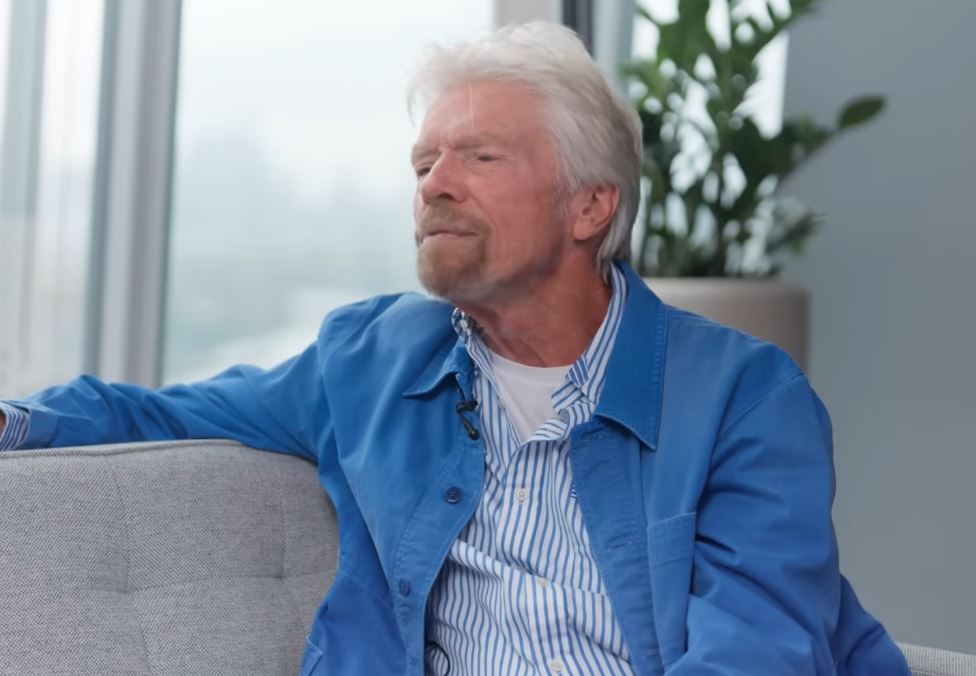
Richard Branson's net worth is an estimated $2.8 billion (a little over £2 billion) as of July 2026, according to Forbes, which ranks the Virgin founder around 1,477th among the world's billionaires. That is less than half what he was estimated to be worth in 2021, a fall Fortune attributes to pandemic pressure on his travel businesses and the collapse in value of his listed space ventures. Three things have happened since: Virgin Money was sold, an exit City AM valued at around £724 million for Branson in stake proceeds and brand fees; Virgin Atlantic returned to profit; and Virgin Australia went back on the stock market.
Richard Branson at a glance
| Attribute | Details |
|---|---|
| Full name | Sir Richard Charles Nicholas Branson |
| Born | 18 July 1950 (turns 76 this month) |
| Citizenship | United Kingdom |
| Estimated net worth (2026) | $2.8 billion, according to Forbes (July 2026) |
| 2021 estimate | More than double today's figure, according to Fortune |
| Key interests | Virgin Atlantic, Virgin Hotels, Virgin Voyages, Virgin Galactic stake, brand licensing |
| Biggest recent deal | Nationwide's takeover of Virgin Money (2024) – an estimated ~£724m package for Branson (stake + brand fees) |
| Residence | Necker Island, British Virgin Islands (bought in 1978 for $180,000) |
| Family | Widowed (Joan Templeman died in November 2025); two children, Holly and Sam |
What is Richard Branson actually worth in 2026?
Forbes' estimate stands at $2.8 billion as of July 2026. Treat that as an informed estimate rather than an audited fact: the Virgin Group is privately held, spans more than three dozen companies by Fortune's count, and does not publish consolidated financials. Any figure you read, including this one, is an outside approximation.
The direction of travel is better documented than the level. Fortune reported in April 2024 that Branson's wealth had fallen by more than half since 2021, to around $3 billion, dragged down by pandemic losses and the collapse in value of his listed space ventures. Little has moved between that figure and Forbes' $2.8 billion of July 2026. Wildly different numbers still circulate online, as they do for most public figures; we found the same problem picking apart Benjamin Netanyahu's net worth. This piece sticks to figures with a named source behind them.
The pandemic years
Branson's empire is concentrated in travel and leisure, and 2020 hit both. Virgin Australia collapsed into administration. Virgin Atlantic needed a rescue package of about £1.2 billion to stay airborne, and to help fund it Branson sold more than $1 billion of Virgin Galactic stock across 2020 and 2021, according to Fortune. Virgin Galactic's shares later slumped, and Virgin Orbit, the satellite-launch spin-off, went bankrupt in 2023, two years after going public.
None of this was new territory for him. In 1992, with Virgin Atlantic still young, he sold Virgin Records for a reported $1 billion, then his most prized asset.
The recovery: a bank deal, a profitable airline, a relisting
Virgin Money: the £724m package
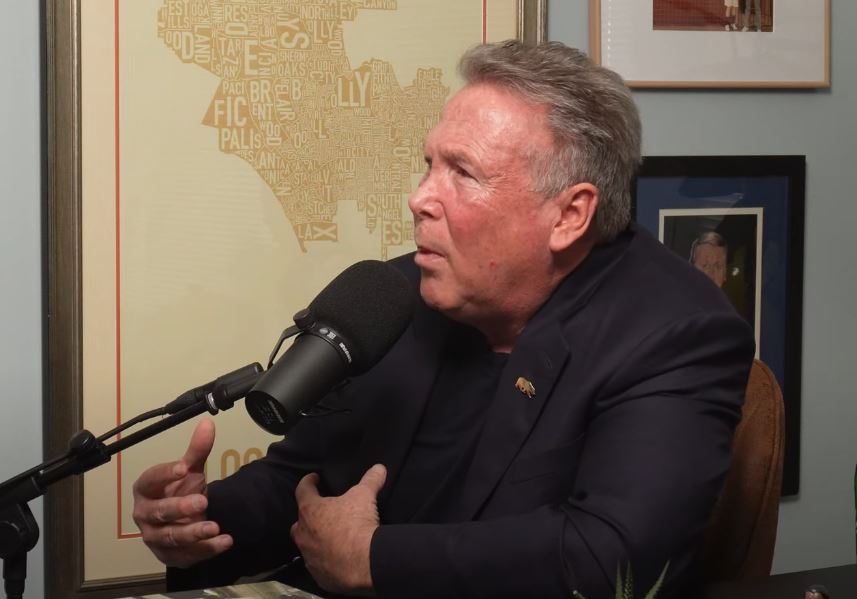
The largest sum publicly attached to Branson in recent years came from banking. Nationwide completed its £2.9 billion takeover of Virgin Money on 1 October 2024, and City AM put Branson's total windfall at around £724 million. That was not a single cheque: it combined £414 million for his 14.5 per cent stake with brand-licensing payments, including a £250 million exit fee as the Virgin Money name is retired from the high street. For a sense of how one deal can move a personal fortune, compare Stephen Cloobeck's $2.2 billion sale.
Virgin Atlantic: back in the black
Virgin Atlantic reported a £20 million pre-tax profit for 2024, its first since 2016, on record revenues of £3.3 billion, and says it has paid down £500 million of pandemic-era debt since 2022. A £20 million profit is thin for an airline that size, and company profits do not land in Branson's bank account; what they do is support the value of his stake, which is precisely what estimates like Forbes' try to capture.
Virgin Australia: back on the market
The airline that collapsed in 2020 returned to the Australian stock exchange in June 2025, in an IPO that raised A$685 million. Most of the proceeds went to Bain Capital, which had bought the carrier out of administration, but Virgin Group kept a stake of about 5 per cent.
Virgin Galactic: the 2026 wildcard
The space company is trying again. Its new Delta-class spaceplane is in ground testing, with flight tests planned for the third quarter of 2026 and the first spaceflights in the fourth; paying private passengers are expected six to eight weeks after the initial research missions, which could push them into 2027. Branson flew to the edge of space aboard VSS Unity in July 2021, nine days before Jeff Bezos, but by late 2023 he was saying the Virgin Group would not put fresh money into the company. Having sold down so much of his stake in the pandemic years, whatever Delta achieves will matter less to his personal estimate than it once would have.
A hard end to 2025
Whatever the numbers say, last year closed in grief. Joan Templeman, Branson's wife and partner of nearly 50 years, died in November 2025 at the age of 80. The couple met in 1976 and married in 1989. Branson, so rarely lost for words, kept his tribute simple:
"She was my best friend, my rock, my guiding light, my world."
The bottom line
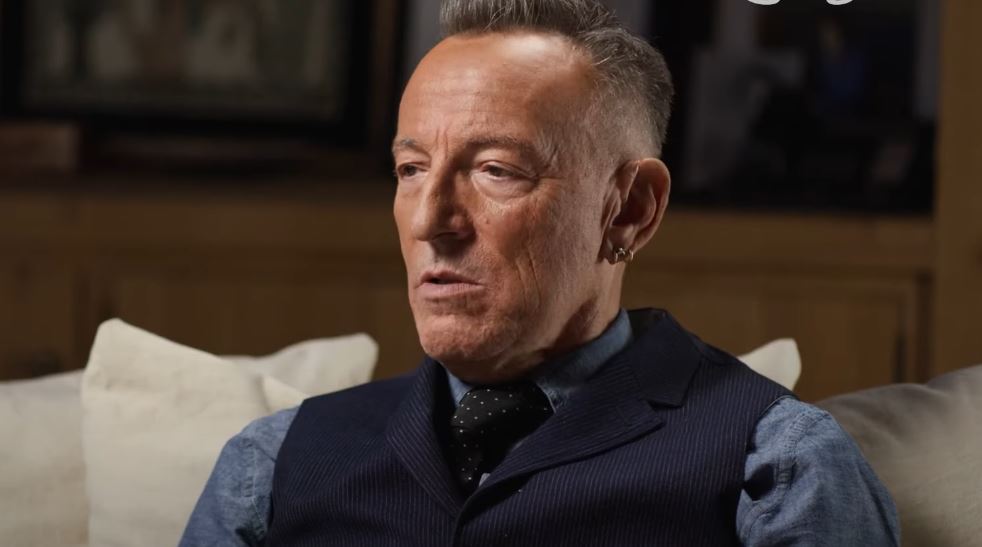
On the numbers that can be checked: $2.8 billion, estimated by Forbes as of July 2026, less than half the 2021 level. The documented picture since 2024 shows Virgin Atlantic profitable, Virgin Australia relisted and the Virgin Money package agreed; how much of that flows through to Branson personally is exactly what outside estimates can only approximate. His is wealth anchored to a brand, much as Bruce Springsteen's $1.2 billion fortune is anchored to a catalogue. On what can be verified, the fortune is smaller than it was, steadier than it looked mid-pandemic, and still among Britain's largest.