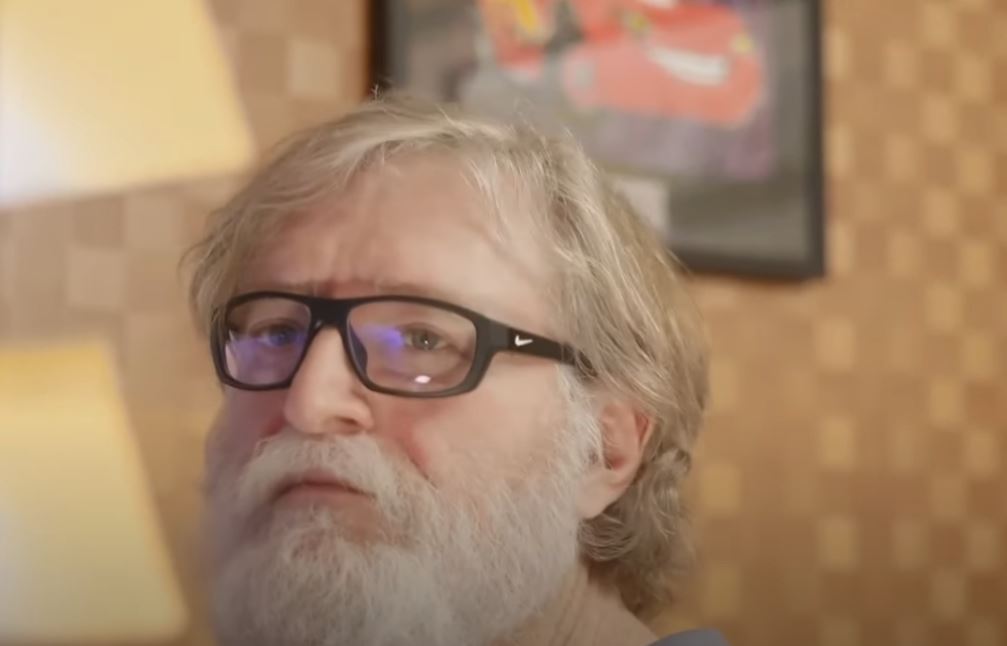
Gabe Newell's net worth now stands at $11 billion — roughly £8 billion — according to Forbes, which has raised its estimate from $9.5 billion and ranks the Valve co-founder 298th among the world's billionaires as of July 2026. That makes him, by most counts, the richest person in gaming: a 63-year-old Harvard dropout who has never sold a share of his company and never published its accounts.
| Quick facts | Details |
|---|---|
| Name | Gabe Logan Newell |
| Age | 63 |
| Net worth (2026) | $11 billion (~£8bn), per Forbes |
| World ranking | #298 (Forbes Billionaires) |
| Company | Valve Corporation (co-founded 1996) |
| Estimated stake | At least 50%, per Forbes |
| Known for | Steam, Half-Life, Counter-Strike, Portal, Steam Deck |
Why Forbes raised its estimate
Valve is a private company, so every figure attached to Newell is an educated guess. Forbes estimates he owns "at least one half" of the business and now values his fortune at $11 billion, up from the $9.5 billion figure that circulated through 2024 and 2025.
What changed is Steam. The platform has broken its own all-time record for simultaneous users repeatedly in 2026, peaking at more than 42.3 million concurrent players on 22 March. No blockbuster launch drove that spike, and the January records fell in quiet weeks too. When a platform's baseline grows that much on its own, the valuation of the company skimming a commission off nearly every sale grows with it.
Estimates still vary. Celebrity Net Worth also sits at $11 billion, and some argue the real number would be far higher if Valve were ever valued like a listed games company. Nobody outside Bellevue knows for certain, and that is exactly how Newell likes it.
Where the money comes from
Newell was Microsoft's 271st employee, hired out of Harvard by Steve Ballmer. He spent 13 years there before leaving in 1996 with colleague Mike Harrington to found Valve, funding it with his Microsoft millions. Half-Life, released in 1998, made the studio's name. The fortune was built on what came next.
- Steam — launched in 2003, it became the default storefront for PC gaming, taking a commission of up to 30% on sales across a catalogue of tens of thousands of titles.
- Live-service economies — Counter-Strike 2 and Dota 2 generate steady revenue through in-game items and marketplace fees, year after year, with no new game required.
- Hardware — the Steam Deck, launched in 2022, proved Valve could sell devices that lock players deeper into its ecosystem.
Because Valve has no outside shareholders, that cash flows to a very short list of owners, with Newell at the top of it. It is the same private-company maths that has quietly enriched other founders we have covered, from Supercell's Ilkka Paananen to YouTube boss Neal Mohan.
The summer 2026 hardware push
The next chapter is already dated. Valve has confirmed that the Steam Machine and Steam Frame will ship in summer 2026, alongside a redesigned Steam Controller. The Steam Machine is a living-room console reported to be around six times more powerful than the Steam Deck; the Steam Frame is a standalone VR headset running the same SteamOS software.
Valve has tried this before, and the 2015 Steam Machines flopped. The difference now is that the Steam Deck proved people will buy Valve hardware. For Newell's balance sheet, the devices matter less than what they protect: every box that runs SteamOS by default is another box where Valve takes its cut of every purchase.
Yachts, a $70.8 million mansion and a brain chip
Newell spent much of the past six years living and working aboard his superyachts. That era appears to be ending. In June 2026 he was reported as the buyer of a $70.8 million (~£52m) waterfront estate in Manalapan, Florida: 22,900 square feet, a dock for the yachts and a private tunnel to the beach.
His side projects are stranger than most billionaires'. Starfish Neuroscience, the brain-computer interface startup he backs, is developing a wireless, battery-free brain chip aimed initially at neurological disorders such as Parkinson's. Its first chips were slated for late 2025.
Is Gabe Newell the richest person in gaming?
Among people whose fortune comes purely from games, he is at or near the very top of the Forbes list. Executives at giants like Tencent or Microsoft may command bigger companies, but gaming is only a slice of those empires. Newell's $11 billion was built almost entirely on one insight from 2003: owning the shop matters more than owning any single game. Judged against fortunes like Mark Zuckerberg's it looks modest. Judged per employee or per hour of publicity sought, it may be the most efficient fortune in tech.